























 Northern Life, Greater Sudbury’s community newspaper, gave Republic of Mining.com permission to post Bill Bradley’s article. www.northernlife.ca
A Primer on the Study, the Process and the Players Involved
(First instalment of a four-part series)
There is some excellent information on the history of mining activities in the Sudbury area in the first background study of the Sudbury Soil Study finished in January 2008, that can be downloaded at their website. Visit Sudbury Soils Study. Copies for public viewing are available at public libraries and post-secondary institutions.
Here are some highlights and quotes from the study that indicate the extent of the devastation of the Sudbury area:
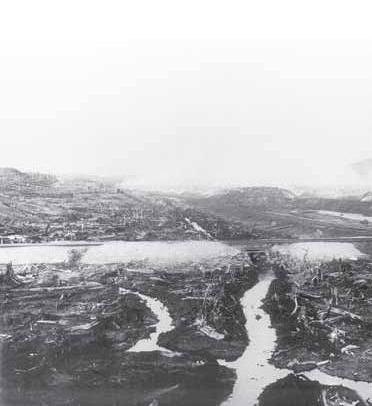
- Roasting yards were an early method of separating valuable minerals from rock. The first roast yard, where crushed ore from pits was piled on beds of cordwood, was built in Dec. 1886. Between 1890 and 1930, 28 million tonnes of ore was smelted primarily in the open. After 1920, ore was mechanically smelted indoors. Until the process stopped in 1929, “they released about 10 million tonnes of sulphur dioxide at ground level, killing plants and acidifying soils…open-bed roasting was a cheap but ultimately inefficient method, as it allowed some of the nickel and copper to be washed into the soil by rains.” In 1916 one former resident of the community near the O’Donnell roast yard said there were days when “I could not see my hand in front of my face.”
- The wartime surge in nickel production in 1916, “increased the volume of noxious gases that wafted from the roast beds into the gardens and fields of the Sudbury basin.” Agriculture in the Blezard Valley was being smothered by the 600,000 tonnes of sulphur dioxide emitted annually by the nickel companies. “In 1916, after successive years of ruined crops, the farmers had had enough, forcing Canadian Copper to pay $137,398 for smoke damages in the year ending March 31, 1916.”
- As the landscape deteriorated around the smelters, effects of emissions could no longer be ignored. Early studies dealt with sulphur dioxide emissions. “Not until the late 1960s did the focus expand to include metal contamination and acidification of the soils. At that time, studies by local foresters and ecologists showed that soil acidity and concentrations of copper and nickel were elevated in the same areas where sulphur dioxide damage had been measured.”